Fast Shot of Epinephrine Boosts Cardiac Arrest Sufferers' Survival: Examine
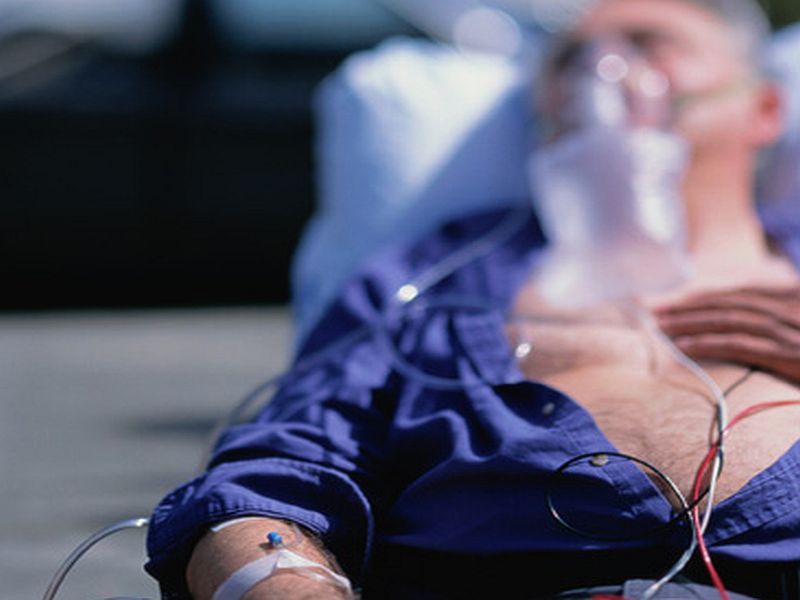
TUESDAY, Dec. 6, 2016 (HealthDay Information) -- Cardiac arrest sufferers who obtain epinephrine (adrenaline) inside 5 minutes of their coronary heart stopping usually tend to survive than those that do not obtain the drug inside that timeframe, based on a brand new examine.
Researchers analyzed outcomes amongst greater than 100,000 sufferers who suffered cardiac arrest whereas staying at practically 550 hospitals throughout america. Cardiac arrest happens when the center all of the sudden stops beating, whereas a coronary heart assault occurs when blood circulate to the center is blocked and coronary heart tissue is broken.
Within the examine, survival charges have been practically 13 p.c amongst sufferers who acquired epinephrine photographs inside 5 minutes of their coronary heart stopping. Charges have been solely 11 p.c amongst those that acquired the drug after 5 minutes had handed.
"That could be a 20 p.c higher survival price for sufferers at hospitals the place epinephrine is given shortly, which is a giant distinction," mentioned examine first writer Dr. Rohan Khera, a cardiology division fellow at College of Texas Southwestern Medical Heart in Dallas.
The researchers additionally discovered that delays in receiving epinephrine photographs led to poorer restoration in sufferers, and that hospitals that handled bigger numbers of cardiac arrests tended to manage epinephrine photographs earlier than these with fewer circumstances.
About 80 p.c of sufferers who are suffering cardiac arrest in a hospital have a situation resulting from causes that may't be handled with a defibrillator, the researchers defined. They must be handled with CPR and epinephrine, they usually have a lot decrease survival charges than those that could be handled with a defibrillator.
"Remedy choices for non-shockable cardiac arrest are so restricted that there was an emphasis on bettering present processes," Khera mentioned in a UT information launch. "Administering epinephrine promptly and bettering the standard of CPR -- these are the simply improved practices, which can be lifesaving."
The findings have been printed on-line Dec. 1 within the journal Circulation.
-- Robert Preidt

Copyright © 2016 HealthDay. All rights reserved.
SOURCE: UT Southwestern Medical Heart, information launch, Dec. 1, 2016

No comments:
Post a Comment