New Clues to Large Leap in U.S. Mosquito Inhabitants
Newest Infectious Illness Information
TUESDAY, Dec. 6, 2016 (HealthDay Information) -- New analysis hints at why the variety of mosquitoes has jumped 10-fold up to now 50 years in sure U.S. states: Elevated urbanization and shrinking ranges of the pesticide DDT within the surroundings might be main elements.
"At first look, current will increase in mosquito populations seem like linked to rising temperatures from local weather change, however cautious analyses of knowledge over the previous century present that it is truly restoration from the consequences of DDT," stated examine co-author Marm Kilpatrick. He's an affiliate professor of ecology and evolutionary biology on the College of California, Santa Cruz.
Nonetheless, Kilpatrick stated, local weather change could also be an element going ahead.
"On the chilly fringe of a species' distribution, temperature issues so much. In Washington, D.C., for instance, the place Aedes aegypti is just not widespread now, it'd grow to be extra widespread if the winters get milder," Kilpatrick stated in a college information launch.
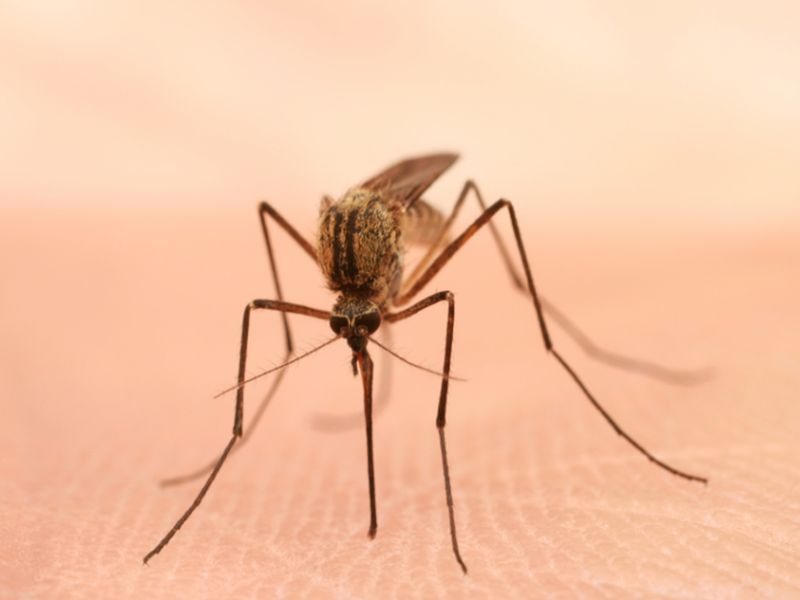
Other than the mere annoyance of mosquito bites, the bugs can carry quite a few illnesses and viruses. The A. aegypti mosquito is taken into account the principle offender in spreading the Zika virus, which is believed to have prompted 1000's of devastating start defects in infants, primarily in Brazil. The commonest start defect seen because the outbreak started in April 2015 is microcephaly, the place the toddler's head is simply too small and its mind is underdeveloped.
Kilpatrick's crew based mostly its findings on an evaluation of mosquito-monitoring packages.
Why would possibly urbanization -- which the examine linked to mosquito ranges in New Jersey and California -- be an element?
The examine authors recommended that it might enhance the variety of mosquitoes that feed on people as a result of there are extra individuals round to chunk.
As for DDT, which was generally used by way of the early 1970s till it was banned, ranges of the pesticide appeared to stay round.
"Everybody knew DDT was a particularly efficient insecticide, however I used to be shocked by how long-lasting its results had been. In some areas, it took 30 to 40 years for mosquito populations to get well," Kilpatrick stated.
The examine was printed within the Dec. 6 subject of the journal Nature Communications.
-- Randy Dotinga

Copyright © 2016 HealthDay. All rights reserved.
SOURCE: College of California, Santa Cruz, information launch, Dec. 6, 2016

No comments:
Post a Comment