Examine Exhibits How Zika Assaults Toddler Mind
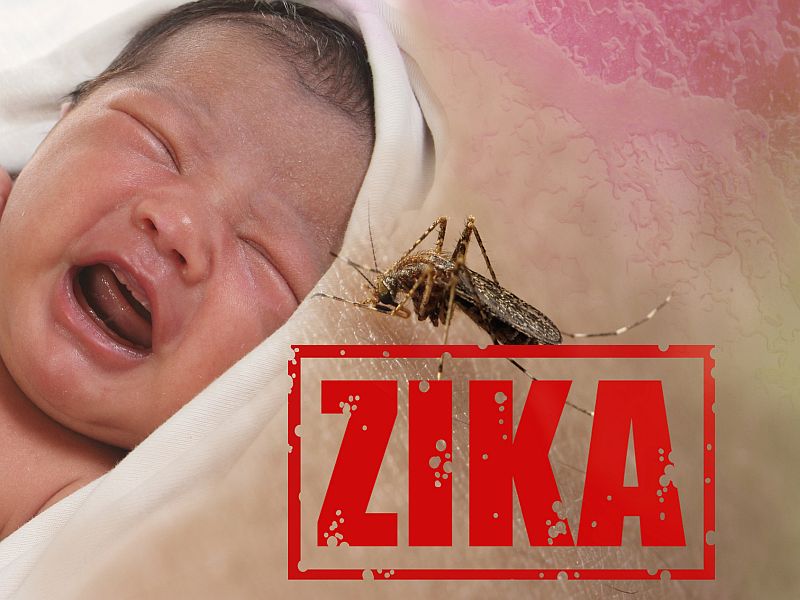
TUESDAY, Dec. 13, 2016 (HealthDay Information) -- New analysis paints a chilling portrait of how Zika ravages the toddler mind.
Scientists from the U.S. Facilities for Illness Management and Prevention report that the mosquito-borne virus can replicate itself hundreds of occasions in each fetal mind cells and the placentas of pregnant ladies. Ranges of Zika's genetic materials had been about 1,000 occasions larger within the infants' brains than within the placentas, the researchers famous.
Not solely that, the virus can persist for greater than seven months, which can clarify why some infants who appeared regular at delivery later developed signs of microcephaly, the researchers stated. The commonest delivery defect related to Zika, microcephaly leaves infants with too small heads and underdeveloped brains.
"Our findings present that Zika virus can proceed to duplicate in infants' brains even after delivery, and that the virus can persist in placentas for months -- for much longer than we anticipated," stated research creator Julu Bhatnagar, lead of the molecular pathology staff on the CDC's Infectious Illnesses Pathology Department.
"We do not understand how lengthy the virus can persist, however its persistence may have implications for infants born with microcephaly and for apparently wholesome infants whose moms had Zika throughout their pregnancies," Bhatnagar stated. "Extra research are wanted to completely perceive how the virus can have an effect on infants."
In all, the analysis staff examined tissues from 52 sufferers with suspected Zika an infection; 44 pregnant ladies and eight infants who had microcephaly and later died.
Of their research, printed Dec. 13 within the Rising Infectious Illnesses journal, the scientists additionally found that the virus seems to achieve entry to the fetal mind by way of a kind of migratory immune cells within the placenta often known as Hofbauer cells.
In the meantime, a report launched final Friday confirmed that the tragedy of a whole lot of infants born with devastating delivery defects linked to the Zika virus is now not confined to Brazil.
Colombia is now additionally experiencing a surge in toddler microcephaly instances.
A staff led by Margaret Honein, of the U.S. Facilities for Illness Management and Prevention, reported that between January and November of 2016, there have been 476 instances of microcephaly in Colombia, a fourfold enhance from the identical interval in 2015.
There have been 9 occasions as many instances of microcephaly in July 2016 than in July 2015, the researchers stated.
And since Colombia's surveillance of delivery defects depends on voluntary reporting, the brand new information "seemingly underestimates the precise prevalence of delivery defects, together with these defects related to Zika virus an infection throughout being pregnant," Honein's staff stated.
The research additionally discovered that the height in instances of microcephaly in Colombia occurred about six months after the best variety of new Zika infections had been reported. This implies that the best threat for Zika-related microcephaly seemingly arises within the first half of being pregnant -- particularly the primary trimester and early within the second trimester.
In response to the most recent figures from the CDC, there have to date been 32 instances of Zika-related delivery defects to live-born infants within the 50 U.S. states and the District of Columbia.
Nevertheless, there's additionally some excellent news on Zika in the USA: the CDC has declared that the state of Florida is now freed from the Zika virus.
However, Texas officers, who just lately reported a suspected case of native an infection, stated final week that they've recognized 4 extra instances of suspected domestically transmitted Zika virus in Cameron County, close to the border with Mexico.
The Colombian research was printed Dec. 9 within the CDC's Morbidity and Mortality Weekly Report.
-- Robert Preidt

Copyright © 2016 HealthDay. All rights reserved.
SOURCES: Dec. 13, 2016, Rising Infectious Illnesses; Morbidity and Mortality Weekly Report, Dec. 9, 2016; information launch, Dec. 9, 2016, U.S. Facilities for Illness Management and Prevention

No comments:
Post a Comment