Coming Quickly: Decrease Ldl cholesterol From a Twice-a-12 months Shot?
 By Dennis Thompson
HealthDay Reporter
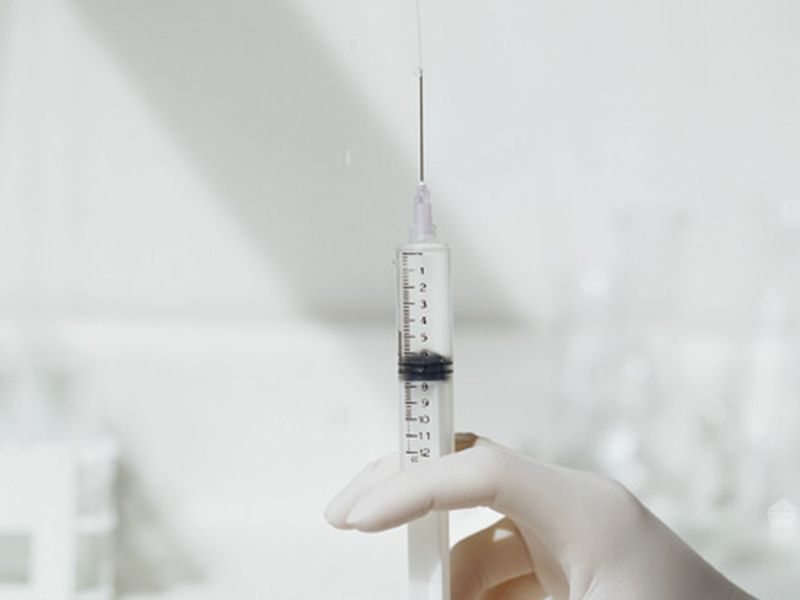
TUESDAY, Nov. 15, 2016 (HealthDay Information) -- As a substitute of popping a tablet day-after-day, individuals may quickly management "dangerous" LDL ldl cholesterol by getting an injection at their physician's workplace two or 3 times a 12 months.
Researchers testing a brand new injectable drug known as Inclisiran discovered it minimize LDL ldl cholesterol by half or extra. Based on early scientific trial information, the impact might final for 4 to 6 months.
Inclisiran produced "vital and sturdy reductions in LDL ldl cholesterol, and thus might probably affect cardiovascular occasions," mentioned research presenter Dr. Kausik Ray, a professor of public well being at Imperial School London in England.
Such long-lasting results might present a significant advance in stopping coronary heart illness, coronary heart assault and stroke, by serving to cut back hardening of the arteries, the researchers mentioned.
The trial outcomes have been offered Tuesday on the American Coronary heart Affiliation annual assembly in New Orleans. One other section of analysis is required earlier than Inclisiran can obtain U.S. Meals and Drug Administration approval.
Statin tablets like Lipitor (atorvastatin) and Crestor (rosuvastatin) are the present gold normal for treating excessive ldl cholesterol, however have their limits, coronary heart medical doctors say.
Nevertheless, one other scientific trial offered at Tuesday's assembly confirmed that combining statins with Inclisiran's class of cholesterol-lowering medication -- PCSK9 inhibitors -- can assist drive LDL levels of cholesterol right down to beforehand unseen ranges.
When paired with a statin, a PCSK9 inhibitor known as Repatha (evolocumab) lowered LDL levels of cholesterol by practically 60 p.c greater than statins alone, mentioned lead researcher Dr. Steven Nissen. He is chair of cardiovascular drugs on the Cleveland Clinic in Ohio.
Ultrasound scans confirmed that bringing levels of cholesterol that low prompted hardening of the arteries to reverse in 4 out of 5 sufferers, Nissen mentioned.
The Repatha research concerned 846 sufferers with coronary artery illness. Half obtained statins alone, and others obtained the PCSK9 inhibitor and statins.
About 81 p.c of sufferers taking Repatha and statins confirmed a discount in arterial plaque quantity, the outcomes confirmed.
"We now have by no means seen ranges of regression at that magnitude in any research beforehand," Nissen mentioned. "It is actually fairly extraordinary."
Nissen's research outcomes have been additionally printed on-line Nov. 15 within the Journal of the American Medical Affiliation.
Medication similar to Repatha and Inclisiran spur the liver to flush extra LDL ldl cholesterol out of the bloodstream by blocking a protein known as PCSK9.
Sadly, first-generation PCSK9 inhibitors like Repatha require sufferers to obtain 12 to 24 injections a 12 months, making them inconvenient and costly, Ray mentioned.
Inclisiran is a next-level PCSK9 inhibitor, which works on a genetic degree to forestall cells from producing PCSK9 within the first place, Ray mentioned.
The Inclisiran scientific trial concerned 500 individuals who have been assigned to both a "management" group or considered one of 4 teams that obtained totally different doses of the drug.
One dose of Inclisiran at 300 milligrams or higher brought on a 51 p.c drop in LDL ldl cholesterol that lasted at the very least 90 days, whereas two doses brought on a 57 p.c discount that lasted as much as six months, Ray reported.
Based mostly on these outcomes, Ray and his colleagues estimate sufferers would solely want an Inclisiran injection two or 3 times a 12 months to regulate their ldl cholesterol.
Nevertheless, Dr. Borge Nordestgaard famous that these are early outcomes.
"The important thing query is, will the LDL ldl cholesterol discount, which could be very spectacular, be sustainable over time," mentioned Nordestgaard, a scientific professor with Herlev-Gentofte Hospital in Herlev, Denmark.
There are comparable questions concerning the discount of arterial plaque associated to PCSK9 inhibitors, mentioned Dr. Robert Eckel, a professor of cardiology on the College of Colorado Anschutz Medical Campus.
Whereas drastically decreasing LDL ldl cholesterol does cut back arterial plaques, Eckel mentioned he's ready for the scientific trials to indicate whether or not it will really cut back coronary heart assaults and strokes in these sufferers.
If the remaining arterial plaques are softer and fewer dense, they may really pose an elevated danger as a result of they're extra more likely to break away and block an artery, Eckel defined.
"We now have to attend to see if it will affect affected person outcomes," Eckel mentioned.
Each scientific trials confirmed uncomfortable side effects from the medication just like these reported by individuals taking both statins or placebos, the researchers reported. Muscle aches, headache, fatigue, again ache, hypertension, diarrhea and dizziness have been the most typical uncomfortable side effects.
Each trials are funded by the drug's producers, The Medicines Firm for Inclisiran and Amgen Inc. for Repatha.
Information and conclusions offered at conferences needs to be thought of preliminary till printed in a peer-reviewed medical journal.

Copyright © 2016 HealthDay. All rights reserved.
SOURCES: Kausik Ray, M.D., professor, public well being, Imperial School London, United Kingdom; Steven Nissen, M.D., chair, cardiovascular drugs, Cleveland Clinic; Borge Nordestgaard, M.D., scientific professor, Herlev-Gentofte Hospital, Herlev, Denmark; Robert Eckel, M.D., professor, cardiology, College of Colorado Anschutz Medical Campus; Nov. 15, 2016, presentation, American Coronary heart Affiliation annual assembly, New Orleans; Nov. 15, 2016, Journal of the American Medical Affiliation

No comments:
Post a Comment